Power, Money, and No Oversight: The Leadership PAC Loophole Reshaping Congressional Power
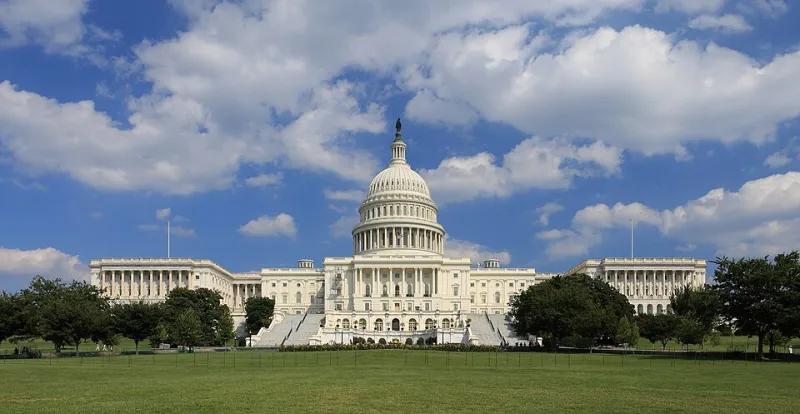
Photo: Martin Falbisoner, CC BY-SA 3.0, via Wikimedia Commons
Washington's campaign finance apparatus is, by most accounts, a labyrinth of rules, disclosure requirements, and enforcement mechanisms designed to ensure that money flowing into and out of politics remains at least nominally visible to the public. Lobbyists file quarterly disclosures. Super PACs report their donors. Campaign committees operate under hard contribution limits and regular FEC scrutiny. And yet, nestled within this architecture of accountability sits an instrument that largely escapes meaningful regulation: the congressional leadership PAC.
These committees, established and controlled by senior members of Congress, have become one of the most consequential—and least understood—financial tools in American politics. They distribute tens of millions of dollars each election cycle, shape the internal power structures of both parties, and generate almost none of the regulatory friction that governs comparable financial activity elsewhere in the system.
What a Leadership PAC Actually Does
On paper, a leadership PAC is straightforward enough. A sitting member of Congress establishes a political action committee separate from their principal campaign committee. That PAC solicits donations from individuals, corporations, and other PACs, then distributes funds to fellow party members running for office. The stated purpose is collegial support—helping colleagues win elections, building a stronger majority, investing in the party's future.
In practice, the mechanics are considerably more complex. Leadership PACs have evolved into instruments of internal party governance, allowing senior lawmakers to accumulate and deploy financial leverage over their colleagues in ways that formal party structures cannot. A freshman representative who receives a $10,000 check from a powerful committee chair's leadership PAC understands implicitly what that contribution represents: access, goodwill, and an expectation of reciprocal loyalty when votes are counted on the floor or committee assignments are handed out.
The dollar figures involved are not trivial. Analysis of FEC filings from recent election cycles reveals that the most prolific leadership PAC operators—typically senior members of the House and Senate in leadership positions or on powerful committees—routinely raise and distribute between $1 million and $5 million per cycle. Across the entirety of Congress, leadership PAC activity amounts to hundreds of millions of dollars changing hands with minimal scrutiny.
The Regulatory Gray Zone
What makes leadership PACs particularly striking from a governance standpoint is not merely their scale but the regulatory environment in which they operate. Traditional campaign committees face strict individual contribution limits—currently $3,300 per election under federal law. Leadership PACs are also subject to contribution limits, but the rules governing how they spend money are dramatically more permissive.
While a candidate's principal campaign committee faces tight restrictions on personal expenditures and must demonstrate that spending is directly connected to campaign activity, leadership PACs have historically been permitted to spend on a far broader range of items. Travel, meals, event tickets, golf outings, and resort stays have all appeared in leadership PAC expenditure records. The FEC's enforcement posture on these expenditures has been, at best, inconsistent.
Perhaps more significant is the disclosure gap. Lobbyists who interact with lawmakers are required to file detailed quarterly reports identifying the legislation they are engaged on, the agencies they have contacted, and the approximate amounts spent on lobbying activity. Leadership PACs, by contrast, disclose donors and expenditures in broad categories that often obscure the true nature of the relationships being cultivated. A contribution listed as "event expenses" or "administrative costs" provides the public with almost no actionable information about what political purpose the spending actually served.
Building Fiefdoms, Not Coalitions
The power dynamics enabled by leadership PACs extend well beyond individual transactions. Over time, lawmakers who operate the most active leadership PACs effectively construct internal political networks that parallel—and sometimes supersede—official party structures. The ability to raise money from industry donors, redistribute it to colleagues, and thereby accumulate chits across a caucus gives senior members a form of leverage that no formal title alone can provide.
This dynamic has particular implications for committee assignments, one of the most consequential decisions in congressional governance. While the official process for assigning members to committees involves party steering committees and leadership input, the informal currency of leadership PAC contributions quietly shapes those deliberations. Members who have received support from a powerful senior colleague are unlikely to forget it when that colleague's priorities come before them.
The result is a system in which financial relationships and policy outcomes become intertwined in ways that are difficult to trace and nearly impossible to regulate after the fact. Donors who contribute to a leadership PAC are not simply supporting a generic political cause—they are investing in a specific lawmaker's internal influence, with the reasonable expectation that this influence will eventually bear fruit in the form of favorable legislative attention.
Why Reform Consistently Stalls
Proposals to impose stricter regulations on leadership PACs are not new. Good-government organizations including the Campaign Legal Center and Issue One have repeatedly called for tighter spending restrictions, enhanced disclosure requirements, and clearer FEC guidance on permissible expenditures. Several pieces of legislation have been introduced over the years that would bring leadership PAC activity closer in line with the rules governing principal campaign committees.
None of these efforts have come close to enactment. The reason is not difficult to identify: the lawmakers most capable of advancing reform legislation are typically the same lawmakers who benefit most directly from the current system. Senior members of Congress—those with the seniority, committee positions, and institutional relationships necessary to move legislation—are precisely the individuals who operate the largest and most active leadership PACs. Asking them to impose restrictions on their own financial infrastructure requires a level of institutional self-sacrifice that the history of congressional reform suggests is exceedingly rare.
The FEC, for its part, has struggled to provide meaningful regulatory clarity. The commission's well-documented partisan gridlock has repeatedly prevented it from issuing definitive guidance on leadership PAC spending practices, leaving the rules in a state of deliberate ambiguity that benefits incumbents and frustrates reformers.
The Transparency Paradox
There is a certain irony embedded in this situation. The post-Watergate campaign finance reforms that created much of the modern regulatory architecture were explicitly designed to bring money in politics into the open, on the theory that transparency itself would act as a check on corruption. Decades later, the system has produced an environment in which some of the most consequential financial relationships in Washington are disclosed in forms that are technically public but practically opaque.
A reporter, researcher, or engaged citizen who spends time reviewing leadership PAC filings will find a great deal of data and very little insight. The names of donors appear. The amounts are recorded. But the underlying relationships—the implicit exchanges, the cultivated loyalties, the policy expectations attached to contributions—remain invisible behind a facade of compliance.
For a political system that prides itself on democratic accountability, that gap between formal disclosure and genuine transparency represents a serious structural failure. Leadership PACs are not an obscure technicality. They are a primary mechanism through which congressional power is accumulated, exercised, and perpetuated. Until the regulatory framework catches up to that reality, they will remain Washington's most effective and least examined money machine.