Hired Guns on the Hill: When Industry Insiders Write the Rules They Once Lobbied For
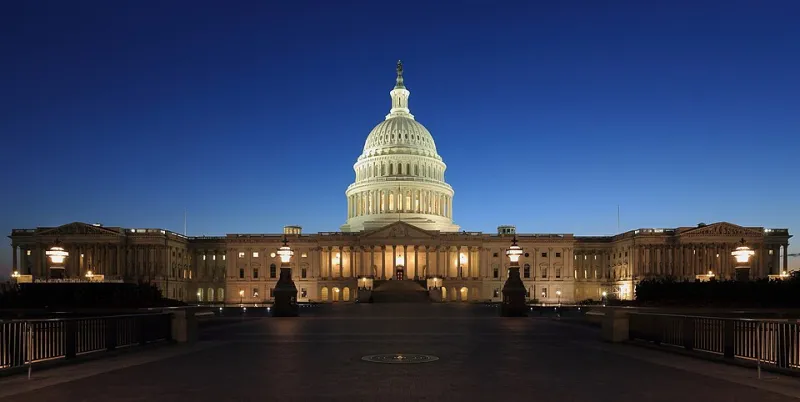
Photo: Martin Falbisoner, CC BY-SA 3.0, via Wikimedia Commons
Washington has a well-documented memory problem. Legislators who spent years advocating for pharmaceutical pricing flexibility before joining Congress tend to forget the public interest once the gavel is in their hand. Regulators who cut their teeth defending energy conglomerates often find it difficult to impose the kind of aggressive oversight that independent watchdogs recommend. This is not coincidence. It is the predictable output of a system that political scientists and ethics advocates have labeled the revolving door — and by most measurable indicators, it is spinning faster than ever.
The Architecture of Influence
The term "revolving door" refers to the fluid movement of individuals between positions in government and roles in the private sector industries those same government bodies are charged with regulating or legislating. While the phenomenon cuts in both directions — public servants leaving for lobbying careers is equally common — the traffic flowing into government from K Street carries particular significance for policy outcomes.
According to data compiled by OpenSecrets, a nonpartisan money-in-politics research organization, more than 400 former lobbyists have held positions in the federal government over the past two decades, spanning executive agencies, congressional staff positions, and elected offices. In many cases, these individuals moved directly from representing a specific industry to overseeing the regulatory framework governing that same industry, often with little more than a nominal cooling-off period separating the two roles.
The financial logic is straightforward. Lobbying firms pay handsomely for individuals with deep government contacts and institutional knowledge. Conversely, federal agencies and congressional offices value candidates who already understand the technical landscape of complex industries. The incentive structure, in other words, rewards exactly the kind of career mobility that creates conflicts of interest.
Case Studies in Regulatory Capture
Consider the trajectory of figures who have moved from senior roles at financial services lobbying operations into positions at the Securities and Exchange Commission or the Treasury Department. During the years leading up to the 2008 financial crisis, several key deregulatory decisions were shaped by officials whose immediate prior employment had involved advocating against the very oversight measures they were now empowered to enforce. The results are now part of the historical record.
The pharmaceutical sector offers equally instructive examples. Former lobbyists for major drug manufacturers have repeatedly landed in senior roles at the Food and Drug Administration and in congressional health subcommittees. Critics argue that the agency's historically cautious approach to drug pricing reform — despite sustained public pressure — reflects, at least in part, the professional sympathies of personnel whose careers were built defending industry prerogatives.
These are not allegations of outright corruption. Most individuals who navigate this career path do so entirely within the bounds of existing law. That is precisely the point. The revolving door is a legal mechanism, and its consequences flow from structural incentives rather than individual malfeasance.
What the Disclosure Data Reveals
Federal financial disclosure requirements mandate that senior government officials report prior employment, including lobbying work. A systematic review of those disclosures across recent administrations — both Republican and Democratic — reveals consistent patterns. Officials with prior lobbying backgrounds are disproportionately represented in agencies whose regulatory scope aligns with their former clients' industries.
At the congressional level, the picture is similarly striking. Members of relevant committee assignments frequently hold prior professional ties to the industries those committees oversee. A legislator serving on the House Financial Services Committee who previously lobbied on behalf of regional banks is not an anomaly; it is a recurring feature of how committee assignments are negotiated and distributed.
Lobbyist-turned-legislators also demonstrate measurable differences in their legislative behavior. Studies examining bill sponsorship, co-sponsorship patterns, and voting records have found that former industry lobbyists in Congress are statistically more likely to oppose regulatory expansion in their former sectors and more likely to support legislation aligned with prior clients' interests.
The Cooling-Off Illusion
Current federal law imposes what are known as cooling-off periods — mandatory intervals during which former officials are prohibited from directly lobbying their former employers or agencies. For members of Congress, that period is one year following the end of service. For senior executive branch officials, it extends to two years in most cases.
Ethics advocates argue these intervals are largely performative. A former senator prohibited from direct lobbying contact may still advise a lobbying firm on strategy, provide introductions, and shape the firm's legislative agenda without technically violating the law. The formal restriction on communication is easily circumvented by informal networks that Washington has cultivated over generations.
Moreover, the restriction runs only one direction. There is no equivalent cooling-off period governing how quickly a former lobbyist may assume a government position. An individual who spent the previous five years advocating against environmental regulations may, upon appointment to the Environmental Protection Agency, begin influencing those same regulations on day one.
Reform Proposals and Their Prospects
A number of legislative proposals have sought to address the structural dimensions of the revolving door with varying degrees of ambition. The Lobbying Disclosure Act has been amended multiple times, most recently in 2007 under the Honest Leadership and Open Government Act, which expanded disclosure requirements and modestly extended cooling-off periods. Critics contend those changes were insufficient and have not produced meaningful behavioral change.
More ambitious proposals have included lifetime bans on lobbying by former members of Congress, mandatory recusal requirements for officials acting on matters directly related to their prior lobbying work, and expanded public disclosure of informal advisory relationships. None of these measures has advanced through both chambers.
The political obstacle is obvious: the individuals best positioned to close the revolving door are often those who have most benefited from keeping it open. Bipartisan reform coalitions have emerged periodically, typically in the aftermath of high-profile scandals, but sustained legislative momentum has proven elusive.
The Accountability Gap
For ordinary Americans attempting to understand why federal policy so frequently appears misaligned with public preferences — on drug pricing, financial regulation, environmental enforcement, and a host of other issues — the revolving door offers a partial but significant explanation. When the people writing the rules are the same people who spent their careers arguing against them, the resulting policy reflects that biography.
Transparency alone is insufficient as a remedy. Publication of disclosure forms does not alter the underlying incentive structure that makes industry experience valuable to government and government access valuable to industry. Structural reform — whether through extended cooling-off periods, stronger recusal mandates, or campaign finance changes that reduce the financial leverage of organized interests — is the only mechanism capable of meaningfully disrupting the cycle.
Until such reforms materialize, the revolving door will continue to spin, and the distance between American governance and the public interest it is meant to serve will remain wider than most civics textbooks acknowledge.