Governing on the Clock: How the Permanent Campaign Has Replaced the Art of Legislating
Photo: U.S. Department of State, Public domain, via Wikimedia Commons
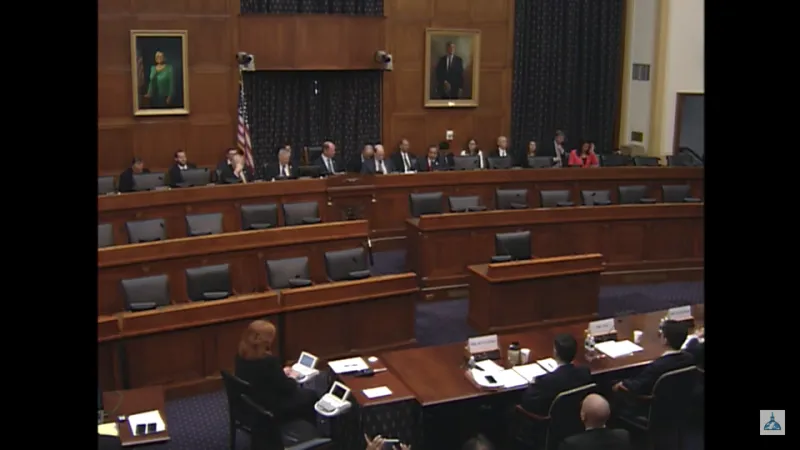
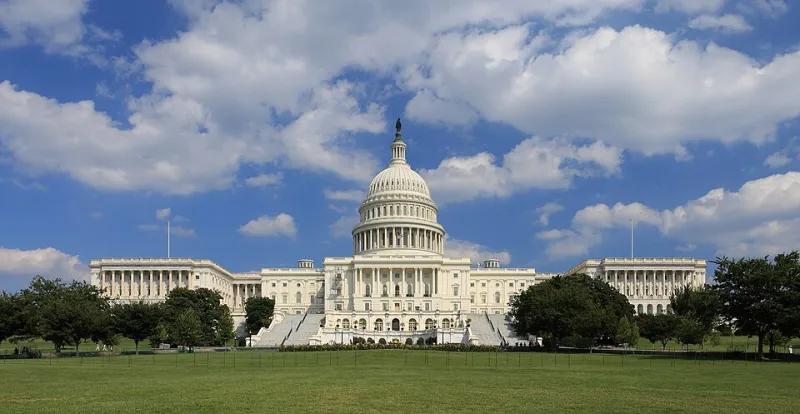
There is a moment, repeated daily across Capitol Hill, that captures something essential about the state of American governance. A member of Congress steps out of a committee hearing — one that may involve consequential decisions on healthcare, defense spending, or financial regulation — to make a series of fundraising calls from a party-designated office just blocks from the Capitol. The calls are scheduled. The scripts are prepared. The targets are ranked by donation history. Then the member returns to the hearing room, picks up where they left off, and the cycle continues.
This is not an anomaly. It is a system.
The concept of the "permanent campaign" — the idea that elected officials treat their entire time in office as an unbroken extension of the race that put them there — has been discussed in political science circles for decades. What has changed is the degree to which it now defines, rather than merely influences, the rhythms of American political life. For many legislators, the campaign never ends because it structurally cannot.
The Fundraising Treadmill
Members of the House of Representatives face reelection every two years. That cycle, compressed and relentless, creates a fundraising imperative that begins almost the moment a new member is sworn in. Party leadership in both chambers has, over time, formalized this pressure into explicit expectations. Members are assigned fundraising targets — sometimes called "dues" — that must be met to secure desirable committee assignments and leadership positions.
The numbers are not trivial. Senior members of competitive committees can face internal party expectations to raise several hundred thousand dollars per cycle for the party's campaign arm, in addition to funding their own reelection efforts. The arithmetic of meeting those targets while also attending hearings, reading legislation, and engaging constituents is, for many members, simply impossible. Something has to give. Increasingly, it is the governing.
Former members who have spoken candidly about their time in office describe spending between two and four hours per day on fundraising calls during non-recess periods. That figure, drawn from accounts reported by outlets including The Atlantic and Politico, represents a staggering diversion of attention from the work voters elected them to perform.
Opposition Research as a Governing Reflex
The permanent campaign does not merely affect how legislators spend their hours. It shapes how they think about policy itself. When every vote is evaluated not on its merits but on its messaging potential — how it will look in an opposition ad eighteen months from now — the deliberative quality of lawmaking degrades.
Opposition research operations, once reserved for campaign season, now run continuously. Political parties and allied outside groups maintain year-round research shops that monitor floor votes, public statements, social media activity, and even attendance records. Legislators are acutely aware of this surveillance. The result is a kind of policy paralysis, where compromise becomes toxic not because it is substantively wrong but because it produces a thirty-second clip that can be used against a member in a primary.
The fear of the attack ad has become a governing philosophy.
This dynamic is particularly acute in primary elections, where turnout tends to be low and ideologically motivated. As this publication has previously examined, low-participation primaries create structural incentives for legislators to play to their most activated supporters rather than their broader constituency. The permanent campaign amplifies this effect, because members are always, in some sense, already in primary season.
Message Testing Where Policy Deliberation Used to Live
Another casualty of the perpetual campaign is the policy deliberation process itself. Legislation that might once have been shaped through sustained engagement with subject-matter experts, constituent groups, and cross-partisan negotiation is now frequently designed around its communicative properties first and its substantive effects second.
Focus groups and polling data — tools historically deployed to sharpen campaign messaging — are now routinely used to evaluate whether a policy position will resonate with targeted voter segments. There is nothing inherently wrong with politicians understanding public opinion. The problem arises when message optimization replaces policy design as the primary driver of legislative content.
The result is a body of legislation that is often better crafted for press releases than for practical implementation. Bills are named with rhetorical precision. Provisions are included or excluded based on their susceptibility to mischaracterization. Complexity, which is often unavoidable in serious governance, becomes a political liability — and so it gets avoided, even when the problem demands it.
The Constituent Relationship Under Strain
Perhaps the most corrosive effect of the permanent campaign is what it does to the relationship between elected officials and the people they represent. Constituent engagement — town halls, district office meetings, casework — has always competed with Washington demands for legislators' time. The permanent campaign has added a third claimant that frequently wins: donor cultivation.
High-dollar donors receive access that ordinary constituents cannot match. This is not a new observation. What is less frequently noted is how the permanent campaign has rationalized and systematized this disparity. When a member's political survival depends on continuous fundraising, time spent with constituents who cannot write large checks becomes, from a purely operational standpoint, inefficient. The logic is brutal and, within the current system, not entirely irrational.
The town hall, once a staple of representative democracy, has become a fraught and infrequent event — avoided in many districts because it creates unscripted moments that can generate damaging footage. The permanent campaign, which demands message control, is incompatible with genuine public accountability.
Structural Reform or Managed Decline?
Some reform advocates argue that the solution lies in public financing of elections, which would reduce the fundraising burden and, theoretically, restore time and attention to the business of governing. Others point to longer House terms, ranked-choice voting, or changes to primary structures as mechanisms for reducing the perpetual electoral pressure that distorts legislative behavior.
These proposals face obvious obstacles. The system that produces the permanent campaign also produces the legislators who would have to dismantle it. Members who have mastered the fundraising treadmill have little incentive to slow it down. Party campaign committees that depend on member dues have every reason to maintain the current structure. And outside groups that profit from year-round opposition research operations are not natural allies of reform.
What remains, absent structural change, is a governing class that is perpetually running, perpetually messaging, and only intermittently legislating. The permanent campaign has not merely changed how politicians behave. It has redefined what it means to hold office in the United States — and the definition, at this point, bears little resemblance to what most Americans believe they are electing someone to do.
The clock, in American politics, never stops. The question is whether anyone is minding what it is counting down to.