The Turnout Trap: How Low-Participation Primaries Are Pulling American Politics to the Extremes
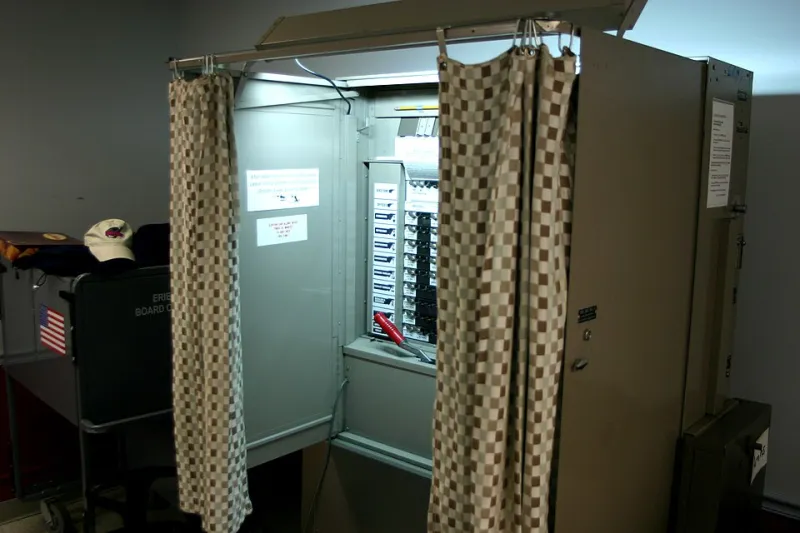
Photo: Dsw4, Public domain, via Wikimedia Commons
In a functioning representative democracy, party primaries serve a straightforward purpose: they allow voters to choose which candidates advance to a general election, ensuring that nominees broadly reflect the preferences of the party's supporters. In practice, American primaries do something considerably different. They hand decisive influence to a small, self-selected segment of the electorate whose views frequently sit well outside the mainstream — and the consequences ripple outward into every dimension of American governance.
Who Actually Votes in Primaries
The numbers are stark. In a typical midterm primary election, national turnout hovers between 15 and 20 percent of eligible voters. In presidential primary years, participation climbs somewhat higher, but rarely approaches the levels that would make a primary electorate statistically representative of the broader population. The voters who do show up are not a random sample. They are, on average, older, more ideologically committed, more likely to identify as strong partisans, and more likely to belong to organized advocacy groups than the general voting population.
This self-selection process has a predictable effect on outcomes. Candidates who speak the language of the activist base — who signal ideological reliability, embrace confrontational rhetoric, and avoid the kind of compromise-oriented positioning that general electorates tend to reward — enjoy a structural advantage in primary contests. Candidates who prioritize coalition-building, moderate positioning, or bipartisan credibility are frequently penalized for exactly those qualities.
The result is a nomination pipeline that systematically filters out a particular type of politician — the pragmatic problem-solver — in favor of another: the ideological purist.
Safe Districts and the Disappearance of Competitive General Elections
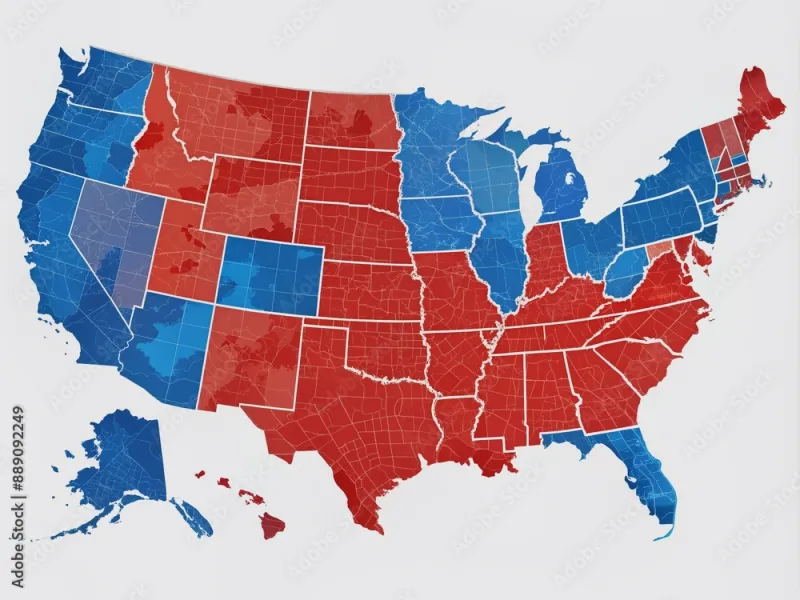
The primary turnout problem is compounded by the geographic sorting of the American electorate and the deliberate construction of non-competitive congressional districts. In a district drawn to be reliably Republican or reliably Democratic, the primary election is functionally the final election. The general election that follows is a formality.
This dynamic transforms the primary into the only moment of genuine electoral accountability — and it places that accountability in the hands of the narrowest possible slice of the electorate. A Republican incumbent in a safely conservative district faces no meaningful threat from a Democratic challenger in November. The only credible challenge comes from the right, in a primary, from a voter pool even more conservative than the district average. The rational response, from a pure electoral survival standpoint, is to move further rightward.
The same logic applies in mirror image to Democratic incumbents in safe blue districts. The gravitational pull is toward the left, not toward the center, because the center is electorally irrelevant in a district where one party's primary is the only contest that matters.
According to analysis from the Cook Political Report, fewer than 10 percent of congressional seats are genuinely competitive in any given general election cycle. That means the primary election — with its distorted electorate — effectively determines the outcome for more than 90 percent of House races before most Americans have paid any attention.
The Polarization Feedback Loop
The downstream consequences for governance are severe and well-documented. Political scientists including Thomas Mann and Norman Ornstein have traced the escalating dysfunction of the U.S. Congress in significant part to the ideological sorting produced by primary mechanics. When legislators are chosen by and accountable to highly motivated ideological constituencies, the incentive to negotiate, compromise, and govern across party lines evaporates.
This is not simply an abstract governance concern. It manifests in concrete policy failures: budget crises driven by members who view any fiscal compromise as a primary-season liability, infrastructure negotiations that collapse under the weight of base-pleasing absolutism, and health care debates that produce more performative outrage than durable legislation.
The feedback loop is self-reinforcing. As Congress becomes less functional, public trust in government declines. As trust declines, moderate and disengaged voters — the very voters whose participation would moderate primary outcomes — disengage further. As those voters disengage, the primary electorate becomes even more concentrated among the ideologically committed, and the cycle accelerates.
Expert Perspectives on Structural Reform
A growing number of election scholars and reform advocates argue that the solution lies not in asking voters to behave differently, but in redesigning the systems that shape their choices.
Ranked-choice voting has attracted considerable attention as a potential corrective. Under a ranked-choice system, voters order candidates by preference rather than selecting a single name. The counting process eliminates candidates sequentially until one reaches a majority threshold. Proponents argue this format rewards candidates with broad appeal over those with intense but narrow support — precisely the dynamic that current primaries undermine. Alaska adopted ranked-choice voting for its state and federal elections in 2020, and early evidence from that experiment has drawn national interest.
Open primaries represent another structural intervention. In states with open primary systems, voters registered as independents — or in some cases, members of either party — may participate in any party's primary. This expands the electorate and dilutes the influence of the most committed partisan voters. California's top-two primary system, in which all candidates regardless of party appear on a single ballot and the top two vote-getters advance to the general election, has produced some noteworthy results, including general election matchups between two candidates from the same party in heavily partisan districts.
Critics of these reforms contend that they undermine the legitimate function of political parties — which is to allow ideologically aligned voters to choose their own standard-bearers without interference from opposing partisans. This is a reasonable objection, and it reflects genuine tension between competing democratic values. There is no reform design that resolves that tension completely.
The Representation Deficit
What is not in serious dispute is the representation deficit produced by the current system. Polling consistently shows that on a wide range of policy questions — from immigration enforcement to health care financing to climate regulation — the median American voter holds views that are more moderate than the legislative positions advanced by the median member of Congress from either party. That gap does not emerge from nowhere. It is manufactured, in significant part, by a nomination system that amplifies the preferences of a small, unrepresentative fraction of the electorate.
For a platform dedicated to rigorous political analysis, the primary system represents one of the most consequential and underexamined structural features of American democracy. It is not ideologically neutral. It does not produce randomly distributed distortions. It systematically advantages candidates whose appeal is narrow and intense over those whose appeal is broad and measured — and it does so through mechanisms that are entirely legal, widely understood, and remarkably resistant to change.
Until the architecture of American primaries is reformed in ways that expand meaningful participation and reduce the veto power of ideological minorities, the candidates who emerge from that process will continue to reflect the preferences of the few rather than the many. And American governance will continue to pay the price.